LEGACY
Ran Ballard
The Ballard family entered the entertainment industry during the height of Hollywood’s studio system.
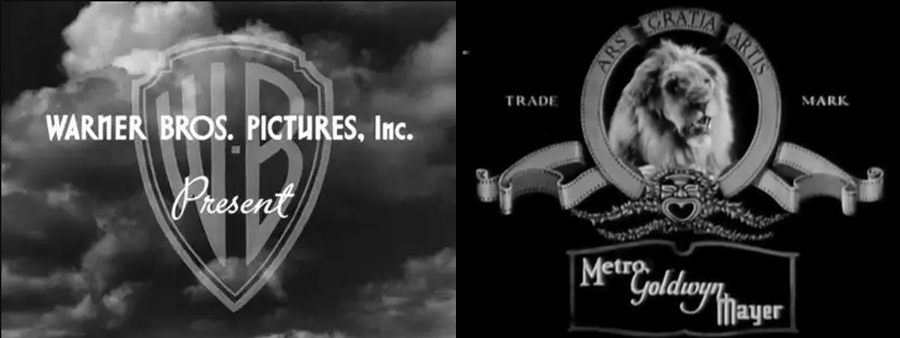
In 1930, Ran Ballard’s grandfather arrived in Los Angeles to operate a locomotive for a western being produced by Warner Bros. What began as a single job quickly turned into a career when he witnessed the collaborative ecosystem of the studio era — writers, craftspeople, technicians, and performers working together at scale to create motion pictures. He remained in the industry and transitioned into special effects during a time when effects were achieved through mechanical ingenuity, physical construction, and practical execution.
He later worked on productions including Show Boat and was among the craftsmen loaned to Metro-Goldwyn-Mayer during the production of The Wizard of Oz, one of the most ambitious films of its era.
Ran’s father continued the family’s work in the industry during television’s rapid expansion in the early 1960s. As a special effects technician at MGM, he contributed to numerous popular series including Batman, The Munsters, Gilligan’s Island, The Monkees, and The Green Hornet, working within the technical backbone of television’s early production era.
Growing up around studio lots and production environments, Ballard absorbed the mechanics of entertainment long before pursuing a career of his own.
Music and Early Career
Like many of his generation, Ballard’s creative ignition came through music. Inspired by the cultural shift of the 1960s, he began teaching himself piano, guitar, bass, and drums, developing an early fascination with songwriting, arrangement, and performance.
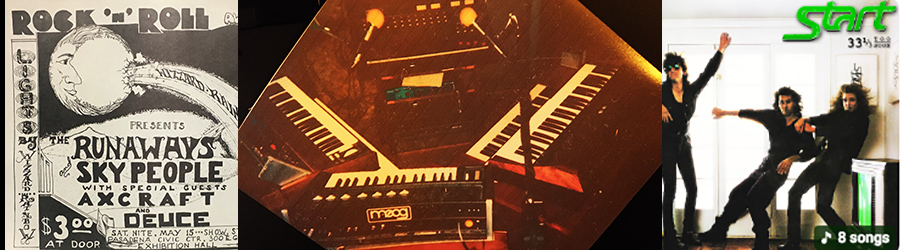
While working within the film industry through I.A.T.S.E. during his late teens, Ballard simultaneously pursued music professionally. In the mid-1970s he became the keyboardist and composer for the progressive rock band Axcraft, which signed to Capitol Records. During the recording of the band’s debut album, internal disputes over contracts led to his departure before the project was completed. The album was later released independently and gained strong reception among progressive rock audiences.
Following Axcraft, Ballard developed the concept for START, a progressive rock project built around synthesizers, emerging music technology, and a tight three-piece format. The band released its debut independently through Ballard’s own label GO NOW Records, achieving airplay across more than 150 college radio stations and building a national following through independent distribution and live performance.
START later re-formed decades later to revisit early compositions and release new albums. Ballard continues to write, produce, and release music through the project START.ROCKS, with recordings available on all major streaming platforms.
Las Vegas and Live Entertainment
Ballard’s early career intersected with the unique live entertainment ecosystem of Las Vegas during the 1970s, when the city’s showrooms hosted some of the most elaborate stage productions in the world.
Through the MGM Grand and other major venues, he worked within the backstage infrastructure that powered nightly productions — from props and technical operations to the sound department. During this period Ballard transitioned into live sound engineering, working directly with and handling microphones for performers including Frank Sinatra, Ann-Margret, Olivia Newton-John, and Liberace, gaining firsthand experience inside the large-scale entertainment productions that defined the Las Vegas showroom era.
Working in the sound department placed him in direct contact with performers on stage and backstage each night — a rare level of interaction in an environment where most technical crews operated far from the artists themselves.
One of Ballard’s most notable engagements during this period was working as a soundman on The Frank Rosenthal Show, the casino production later made widely known through Martin Scorsese’s film Casino. The experience provided a rare view into the intersection of entertainment, casino culture, and the personalities that shaped Las Vegas during that era.
The environment — the backstage crews, the spectacle of the shows, and the machinery required to produce them nightly — would later inform the world depicted in Ballard’s series Bohemianz.
Technology, Production, and Touring
As music production entered a period of rapid technological evolution in the late twentieth century, Ballard became deeply involved in the intersection of music, computers, and emerging digital production systems.
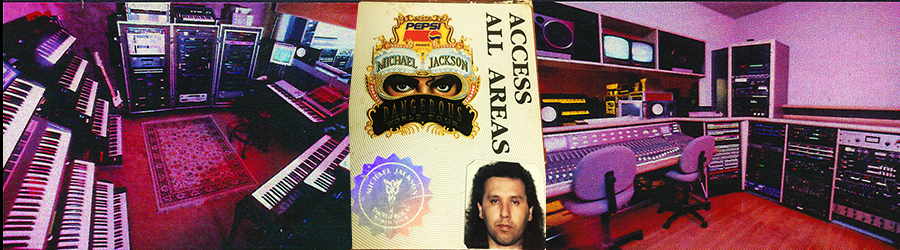
Through his music and post-production studios Hydra Tech, Media Vortex, and Mediaologie, Ballard worked on projects with producers including Quincy Jones, Richard Perry, Burt Bacharach, and Freddie Perren, using those opportunities to refine his craft as a producer and engineer while working at the forefront of evolving studio technology.
Hydra Tech operated studios and production offices in Los Angeles and London, supporting both American and European artists and production teams.
During this period Ballard was tasked with introducing digital recording technologies and sequencing systems to major recording artists while also developing new sound libraries and programming environments for emerging synthesizers and studio equipment.
His companies worked directly with manufacturers including Digidesign, Korg, Ensoniq, E-Mu Systems, and Roland, serving as an endorsee and programmer for the latest generation of synthesizers, digital recording systems, and studio hardware.
Ballard was also an early programmer and developer within Synclavier and Pro Tools environments, contributing during the transition that reshaped modern music production from analog recording to fully digital workflows.
As multimedia technology emerged in the 1990s, Ballard expanded into interactive development, creating enhanced CD-ROM music releases for Sony Music and Universal Music that combined audio tracks with video content, band information, and early web connectivity.
He later applied these programming skills to the emerging DVD format, developing interactive DVD systems for major studio film releases including The Mummy, Jurassic Park III, and Meet the Parents, along with additional titles for Universal, Sony, and Warner Bros. These projects included interactive games, expanded content, and early web-connected features designed to extend the film experience beyond the theater.
At the same time, Ballard began working with the first generation of Avid nonlinear editing systems, developing and installing digital video environments for post-production houses and creating some of the earliest portable rental editing systems for on-set playback and rapid editing, allowing directors and producers to review and assemble material directly during production.
Return to Film
Ballard eventually returned to filmmaking with a deep technical understanding of sequencing, structure, and digital production systems.
Recognizing that nonlinear editing shared many similarities with musical composition and programming, he transitioned fully into film and post-production. Over time he expanded his work across writing, directing, producing, editing, sound design, motion graphics, color correction, and production audio.
This multidisciplinary capability allowed Ballard to operate across the full creative pipeline — from concept and composition through final delivery.
Continuity
The Ballard family now spans four generations in the entertainment industry.
Ran’s son Devin Ballard, an award winning Motion graphics Designer (Marvel, Netflix, HBO), represents the fourth generation working within the evolving landscape of cinematic design and visual storytelling.
From practical studio-era filmmaking in the 1930s, to television production in the 1960s, to global music touring and digital recording, to nonlinear editing and multimedia production, to AI-era storytelling infrastructure today, the throughline is not nostalgia.
It is continuity of craft.
Present
Today Ballard focuses on developing original long-form narrative projects that draw upon his experiences across music, live performance, film production, and emerging technology.
His current work includes the series Bohemianz, set in 1974 Las Vegas and informed by the real backstage environments and entertainment systems that shaped his early career.
Having worked through multiple technological revolutions — from analog recording and arena touring to digital post-production and multimedia development — Ballard now applies that same systems-level perspective to the next phase of storytelling: AI-driven production and simulation-based narrative worlds. |